















- Can you add cooling to tanks that are not currently jacketed?
In some cases, external cooling options like in-tank cooling coils, plate heat exchangers or glycol wraps can be retrofitted. The feasibility depends on the tank design, available glycol capacity and piping access. We can assess your setup and advise on the best approach.
- How do I know if my glycol chiller is undersized for my fermentation load?
Signs include the glycol supply temperature rising above the design set point during peak fermentation, the compressor running continuously without cycling off, and tanks struggling to reach or maintain their target temperatures. If you have added tanks since the chiller was installed, an assessment of your current cooling load against the chiller’s rated capacity is a good starting point.
- What causes temperature swings in fermentation tanks?
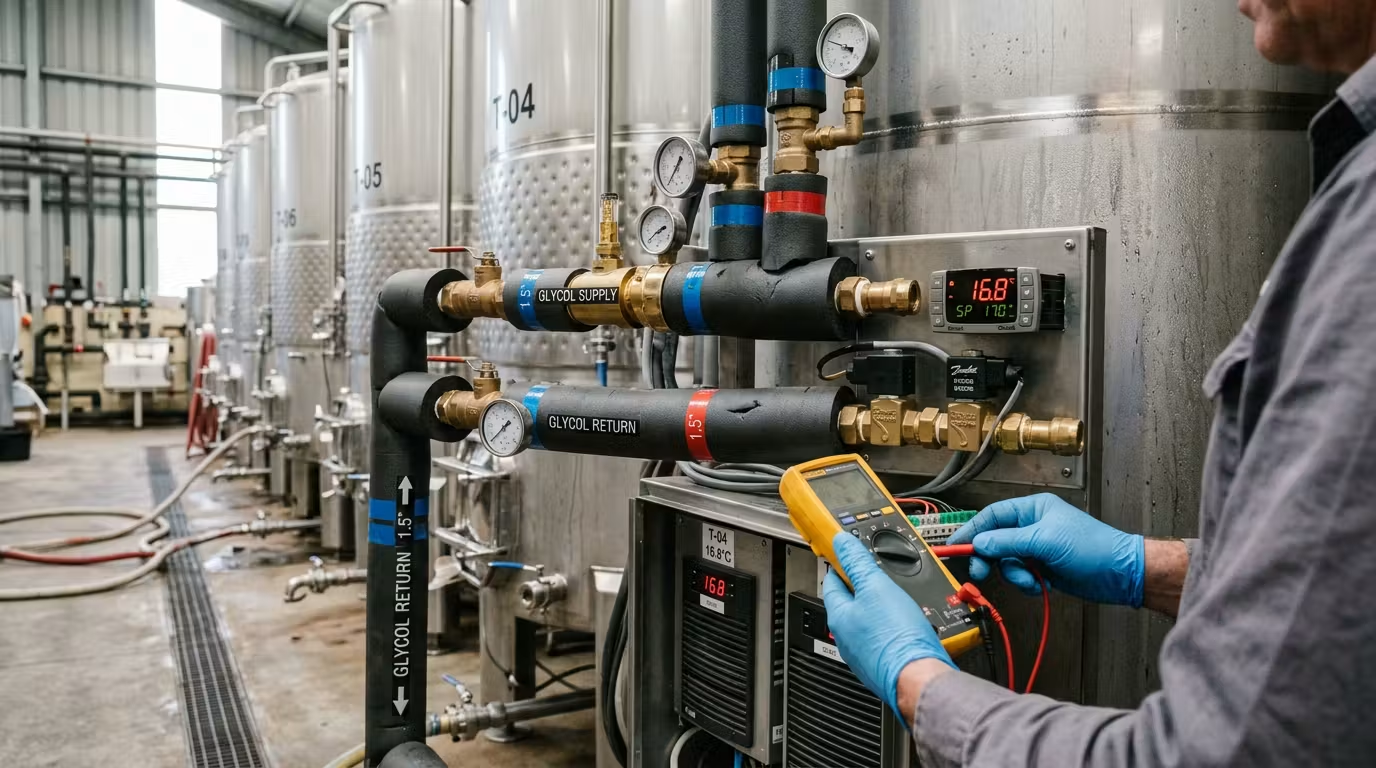
The most common causes are drifting temperature sensors, faulty solenoid valves, glycol flow restrictions or an undersized chiller that cannot maintain supply temperature under full load. Systematic diagnostics can identify which component is responsible.
- Why is one fermentation tank warmer than the others?
If one tank is affected while the rest of the system is stable, likely causes include that tank’s sensor, controller, solenoid valve, branch valve, strainer or jacket flow. If tanks at the end of the same circuit are affected together, the issue may be distribution, pump duty or system balancing. Measurements at the tank and across the glycol circuit are needed to separate a local fault from a wider hydraulic problem.
- Can you test the system before vintage without full production load?
Yes. Component checks and staged load testing can identify many faults before crush, although an unloaded test cannot reproduce every peak-vintage condition. Reviewing previous temperature trends, alarm history, tank additions and production plans alongside the physical inspection gives a more realistic picture of seasonal risk.
- Should a winery monitor glycol temperature as well as tank temperature?
Monitoring both provides better fault context. Tank temperature shows the production outcome, while glycol supply and return conditions help show whether cooling is available and being transferred. Alerts are most useful when thresholds and delays are set to flag genuine drift without creating nuisance alarms.
- How often should fermentation cooling components be inspected?
At minimum, all solenoids, sensors, controllers and glycol connections should be inspected as part of a pre-vintage service. Wineries with large tank counts or year-round cooling requirements benefit from quarterly checks.
Fermentation Temperature Control for Wineries
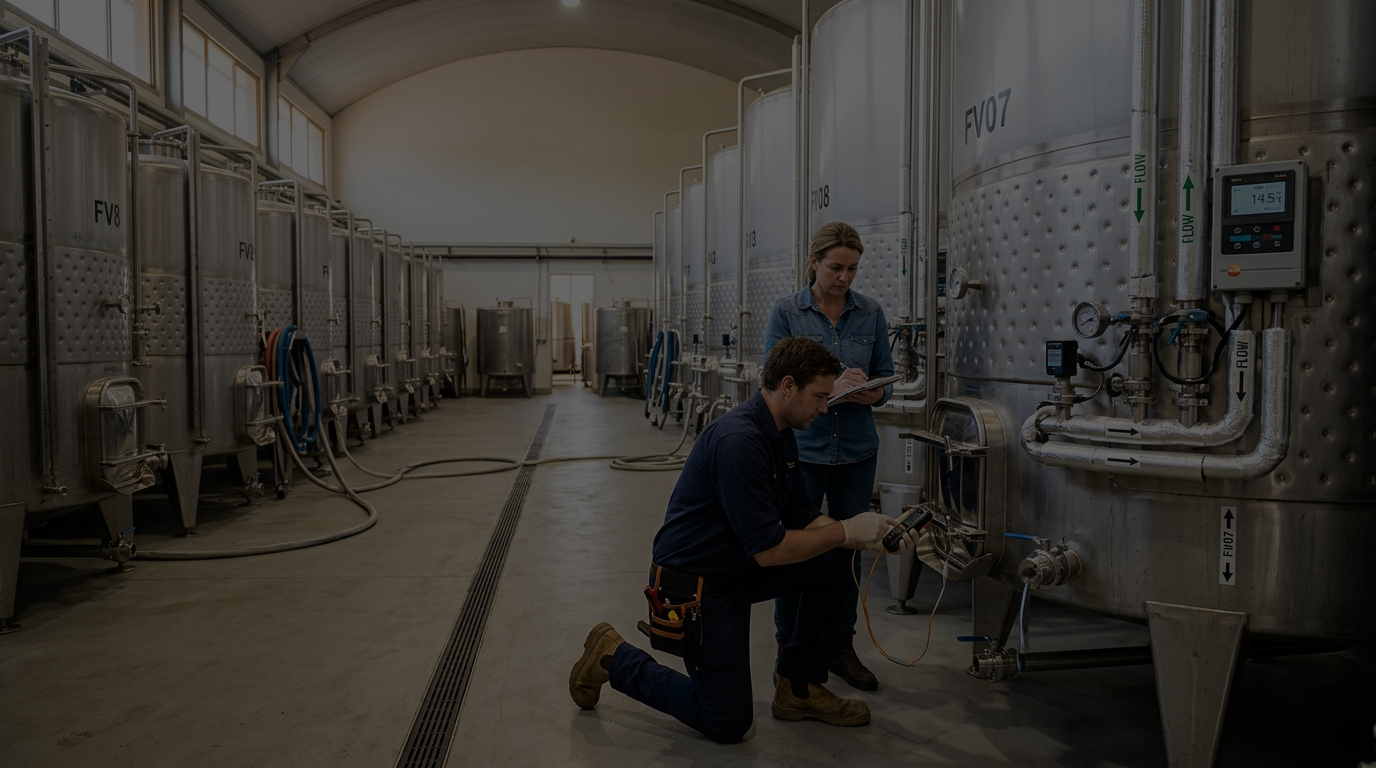
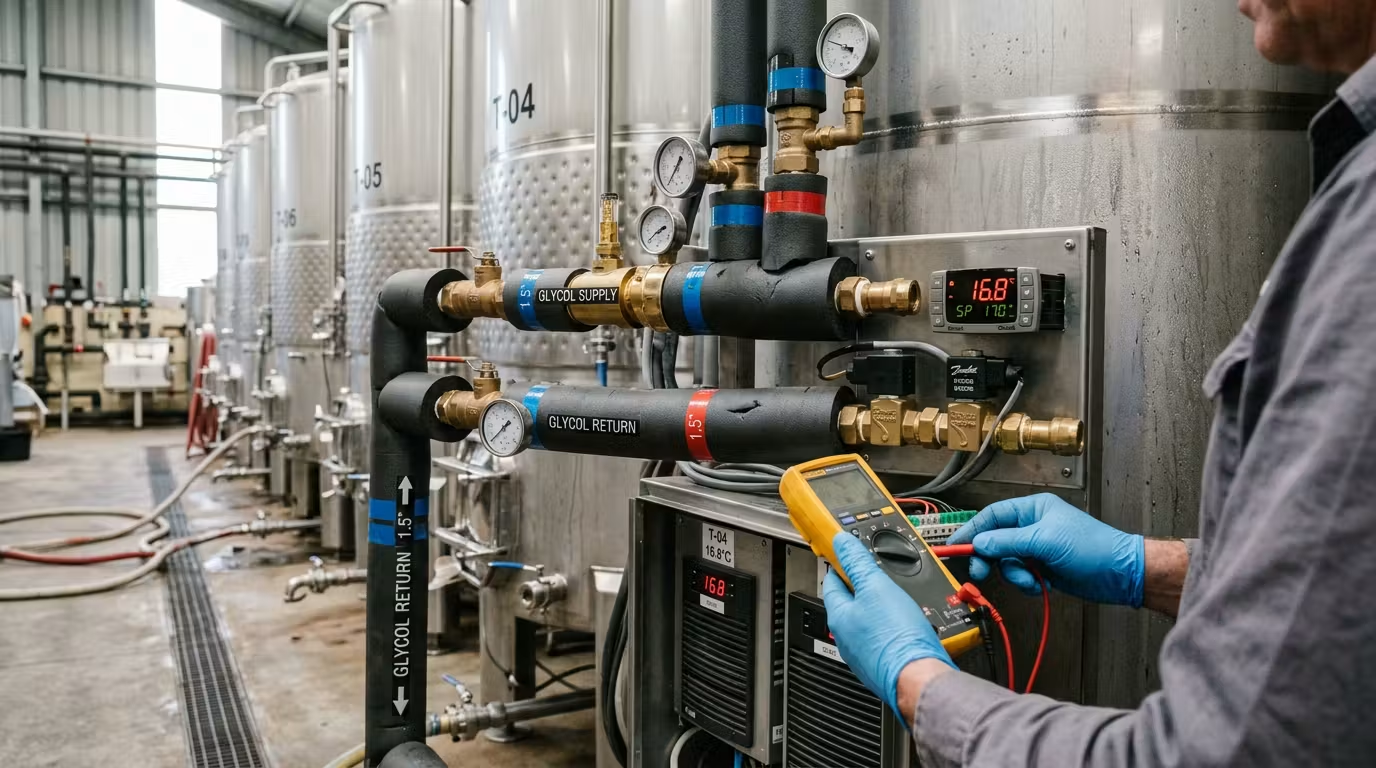
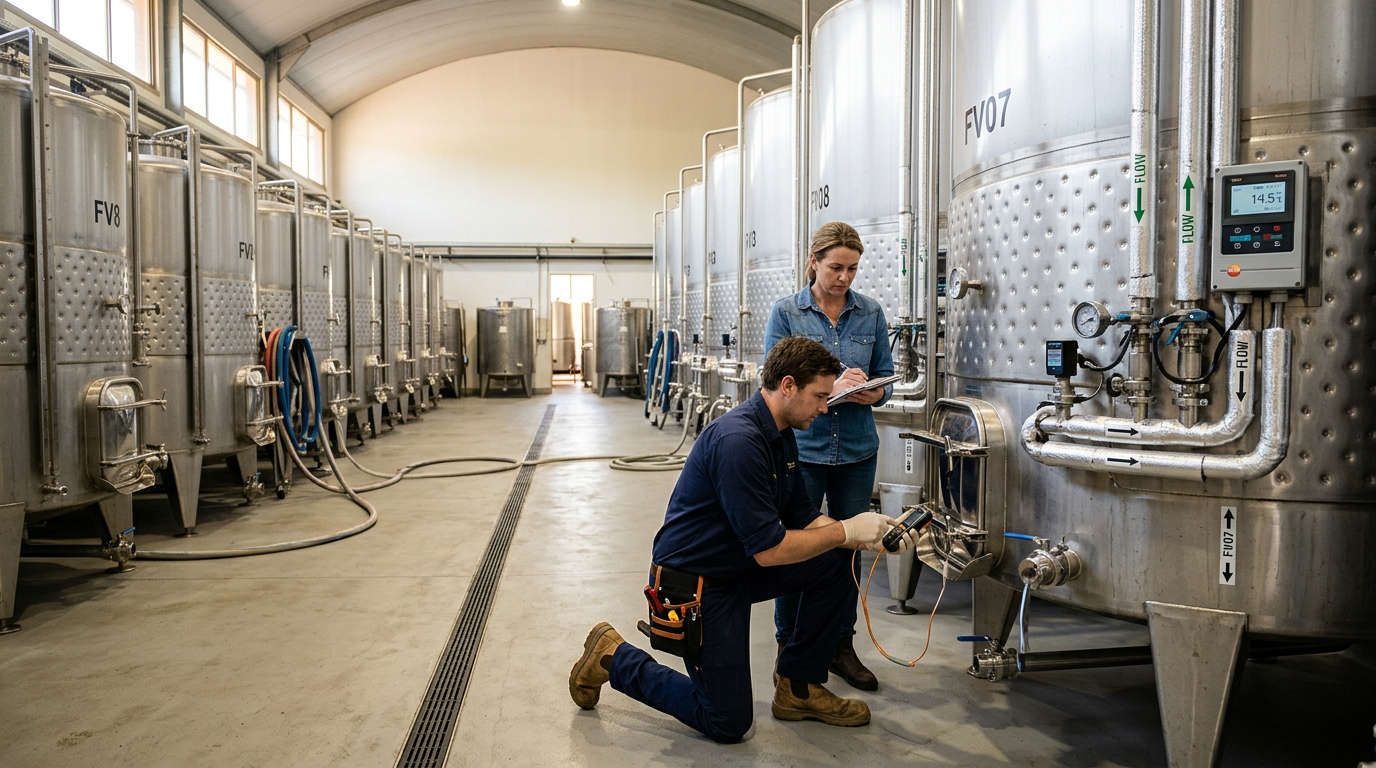
Fermentation temperature control is fundamental to your winemaking. You know what your target ranges are and what happens when they drift. What we focus on is keeping the equipment that delivers that control the glycol chiller, the tank jackets, the solenoids, the sensors and the controllers – operating reliably so you can hold those targets through every tank, every batch, every vintage.