
Currently viewing 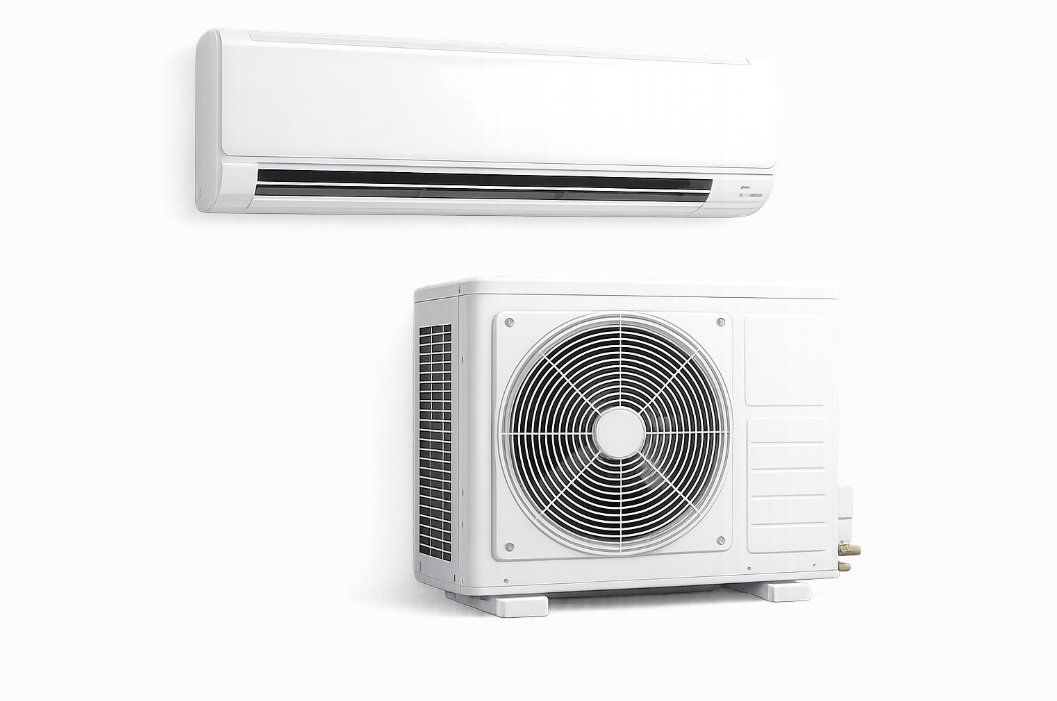
Daikin
Daikin 23.5kW Inverter Ducted Reverse Cycle System, Three Phase (FDYQN250LBV1)
Cooling23.50kW
Heating26.80kW
Home size300-450 m2
Indoor noise49.5 dB
Warranty5 years
The Daikin FDYQN250LBV1 is the largest system listed here — 23.5kW cooling and 26.8kW heating on a three-phase supply, for substantial commercial premises and very large homes.
Coalfields Climate Control designs, supplies and installs systems at this scale across the Hunter Valley, starting with a proper load calculation and an electrical supply assessment.
The FDYQN250LBV1 pairs with the RZQ250LY1 outdoor unit on 415V three-phase supply. Rated capacity is 23.5kW cooling and 26.8kW heating, modulating from 15.0kW to 23.5kW in cooling.
That modulating floor of 15.0kW is high in absolute terms. A system this size cannot run gently — below about two-thirds output it cycles. It belongs in buildings with a genuinely sustained load, not in premises that need full capacity occasionally.
The indoor unit is 500 x 1430 x 970 mm at 92kg — the largest and heaviest here, needing substantial ceiling space, structural support and a viable access route. The outdoor unit is 1680 x 930 x 765 mm at 193kg on a proper concrete base.
Gas pipe steps up to 22.2mm brazed, with 9.5mm liquid. Refrigerant is R410A. Maximum pipe run is 50m.
Outdoor sound power is 79 dBA, the highest in this range — acoustic assessment against boundary limits is genuinely necessary on constrained sites.
– Largest capacity listed — 23.5kW cooling, 26.8kW heating
– 415V three-phase supply with hermetically sealed scroll compressor
– 1400 l/s nominal airflow, 1600 l/s maximum
– Zoning compatible across large multi-area installations
– Brazed 22.2mm gas and 9.5mm liquid connections
– 50m maximum pipe run
– 5-year parts and labour warranty when professionally installed in domestic premises
– Commercial premises roughly 300 to 450 m2 — offices, retail floors, function rooms, gyms
– Very large residential properties with sustained conditioning demand
– Buildings with high internal heat gain from occupancy or equipment
– Installations where a single large plant is preferred over multiple smaller systems
Because it will not modulate below 15.0kW, this is the wrong specification for a building with variable or intermittent load. Two smaller systems will often give better control, better part-load efficiency and useful redundancy — if one is down, you are not left with nothing. We will make that recommendation where it applies rather than simply quoting the largest unit.
Capacity range 15.0-23.5kW cooling, 16.8-26.8kW heating. TCSPF (residential) 3.73/3.41/3.46 and HSPF 3.41/3.08/2.72 (hot/average/cold) under the GEMS 2019 Determination. Airflow 1400/1600 l/s nominal/max. Figures measured to AS/NZS 3823.1.2.
Indoor sound level at high fan, measured 1.5m from the unit. Outdoor sound pressure at high fan, measured 1m from the unit. EPA sound power level 79 dBA -- worth checking against boundary noise limits on tighter sites.
This range uses R410A rather than the R32 used across the single-phase FDYAN range. R410A has a higher global warming potential and a different service and top-up cost profile -- worth factoring into whole-of-life cost.
The FDYQN250LBV1 is rated at 2.99 EER cooling and 3.16 COP heating — the lowest single-point efficiency of any unit listed here. Seasonal figures under GEMS 2019 are a TCSPF of 3.73 / 3.41 / 3.46 and HSPF of 3.41 / 3.08 / 2.72.
Interestingly, its seasonal figures are the best in the FDYQN range despite the worst single-point EER — 3.41 TCSPF in the average zone against 3.15 for the 180 model. For a building running long cooling seasons, seasonal performance is the number that reflects your actual bill.
Rated input is 7.85kW cooling and 8.47kW heating across three phases. Confirming supply capacity and protection is a necessary part of specification at this size.
R410A refrigerant applies. On a system with this charge volume, the cost difference against R32 on any future regas is not trivial, and is worth understanding before committing.
This system pairs the FDYQN250LBV1 indoor unit with the RZQ250LY1 outdoor unit, on a 415V three-phase supply, with a maximum pipe run of 50m.
A ducted system is a building job as much as an equipment job. Before quoting, Coalfields Climate Control assesses ceiling space and access, plans the zone layout and duct runs, calculates the heat load room by room, checks the electrical supply, and confirms where the outdoor unit can sit without creating a noise problem at a boundary.
What supply and install through us covers:
– Manufacturer-approved installation by qualified technicians, so the warranty is not compromised by a non-compliant install
– A lifetime guarantee of workmanship on the installation itself
– A 10-day install guarantee on split system installations in Singleton
– Drop sheets laid before work starts, mess cleaned up afterwards, and a walkthrough of how to operate the system
The most common problem we are called out to fix is not a faulty unit — it is an installation issue: undersized selection, poor outdoor unit placement, or drainage that was never set up properly. Getting the supply and the install from one local team means one number to call if anything is not right.
To arrange a site assessment and quote, call 0422 493 102.
Daikin provides a 5-year parts and labour warranty on ducted systems professionally installed in domestic premises in Australia.
That warranty depends on the installation being carried out correctly by a qualified installer, and on normal use and maintenance. A DIY or unlicensed install is the fastest way to void it — and handling refrigerant without a licence is an offence in Australia regardless of the warranty position.
Coalfields Climate Control installs to manufacturer specification and is manufacturer-approved for full warranty servicing across all major brands, so ongoing servicing can be handled locally rather than through a metropolitan agent. Our own workmanship carries a lifetime guarantee on top of the product warranty.
Warranty coverage depends on correct installation, normal use, maintenance requirements and the manufacturer current warranty terms.
Roughly 300 to 450 m2 of conditioned floor area. Floor area is only a rough guide though -- ceiling height, insulation, glazing and orientation change the answer significantly. We do a room-by-room heat-load calculation on site before quoting a ducted system.
This model needs a 415V three-phase supply. Many Singleton homes have single-phase only, and bringing three phase to a property is a significant separate cost. We confirm what your property actually has as part of the site assessment -- before you commit to anything.
The indoor unit is 500mm high and 1430mm long, and it has to be lifted into position as well as fitted. Ceiling space and access route are among the first things we check on site -- it is far better to find a problem at assessment stage than on installation day.
This model uses R410A. The single-phase FDYAN range uses R32, which has a lower global warming potential and costs less to top up. On a system with this much charge that difference is worth understanding before you commit, so we raise it at quoting stage rather than after.
Ducted pricing depends on the number of zones, duct runs, ceiling access, electrical work and where the outdoor unit can go -- far more variable than a split system. We quote after a full site assessment and heat-load calculation. Call 0422 493 102 to arrange one.
Yes, and it is the single biggest lever on running cost. Conditioning three rooms instead of seven cuts consumption roughly proportionally. Getting the zone plan right at design stage matters more to your bills than small differences in equipment efficiency ratings.
Compare models in the same range, or speak to our team for a sized recommendation.
We are proud to serve a wide range of locations across the Hunter Valley region. Whether you need air conditioning, refrigeration, or solar solutions, our expert team is ready to provide fast, reliable service. Explore the areas we cover below, and get in touch with us for tailored solutions designed to meet your needs, wherever you are.