Last updated on July 30, 2026
By now, you know that a modern air conditioner won’t simply “fail” without reason. In many cases, it’s responding to something it has detected a safety issue, an electrical interruption or a condition that could damage the system if it continued operating.
This section walks through the most common causes we encounter across the Hunter Valley, starting with the simplest and least expensive to investigate.
Our advice is straightforward:
Work through these checks in order.
If you solve the problem early, you’ve potentially saved yourself a service call. If not, you’ve also gathered useful information that can help your technician diagnose the fault more efficiently.
It sounds obvious, but it’s one of the first things we check.
Many people assume that because the display on the indoor unit is lit, the entire system has power. That’s not always the case.
Split systems, ducted systems and larger multi-head installations often have separate electrical circuits protecting different parts of the system.
The indoor unit may appear normal while the outdoor condenser has lost power. Check the following:
You can safely reset it once.
If it trips immediately again, don’t continue resetting it.
Circuit breakers exist to protect both your home and your air conditioning system. Repeated tripping usually indicates an electrical fault that requires investigation.
Continuously resetting a breaker may allow additional damage to occur.
Potential saving: If it was simply caused by a temporary power interruption, you’ve just avoided an unnecessary callout.
You’d be surprised how often the problem isn’t the air conditioner at all. Remote controls live hard lives.
They’re dropped.
Children play with them.
Batteries slowly lose voltage. Buttons wear out.
Sometimes the remote appears to work because the display still lights up, but the batteries no longer produce enough power to reliably transmit a signal.
Try this first
Replace both batteries with fresh ones. Don’t swap one battery.
Replace both.
Then:
If nothing changes, continue to the next step.
This catches homeowners more often than you might think. Modern remotes have numerous operating modes.
If the system has accidentally been switched into Fan mode, it may appear to be running while producing no cooling at all.
Likewise, if Cooling is selected but the temperature is set to 28°C on a 25°C day, the system has no reason to start.
Before assuming a fault Set:
Some inverter systems intentionally delay compressor start-up. Patience can save an unnecessary service call.
Timers are wonderful when you know they’re operating. They’re frustrating when you’ve forgotten they’re enabled. Many remotes include:
It’s remarkably common for someone to accidentally activate one of these features without realising.
If your system refuses to start at the expected time, check the timer settings before assuming something has failed.
One of the most misunderstood features of modern air conditioners is the built-in compressor delay.
Many systems deliberately wait between three and five minutes before restarting. This protects the compressor from short cycling.
Without this protection, rapidly turning a compressor on and off can dramatically shorten its lifespan.
So if you’ve:
don’t immediately assume nothing has happened. Wait.
Sometimes your air conditioner is simply protecting itself.
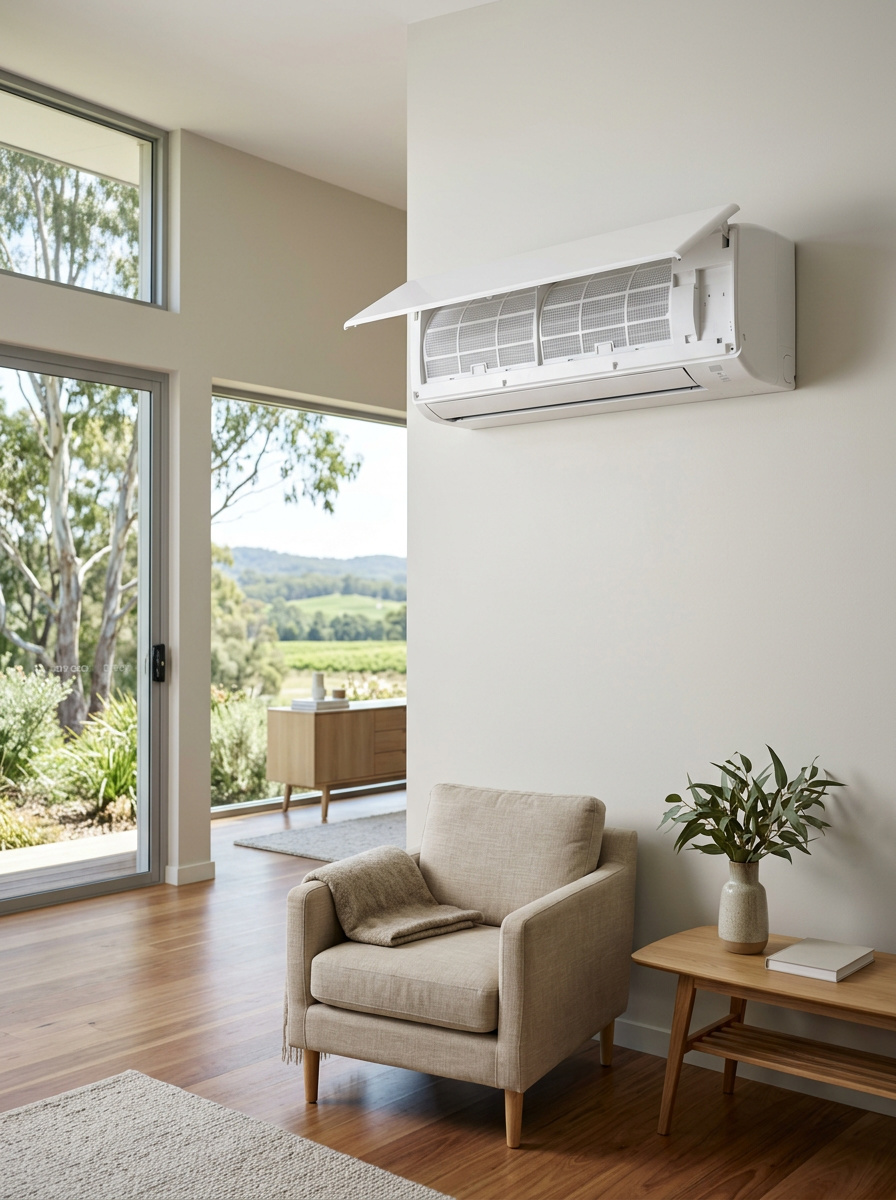
This is probably the single most overlooked maintenance task in residential air conditioning. Filters don’t just improve indoor air quality.
They’re essential to system performance. As filters become clogged:
Eventually, many systems begin protecting themselves. Hunter Valley homes require more frequent cleaning Dust.
Pollen.
Harvest season. Bushfire smoke. Mining activity.
These all increase how quickly filters become blocked.
Some Hunter Valley households should clean filters monthly during summer. The good news
Cleaning filters costs nothing. It takes around ten minutes.
And it can noticeably improve both cooling performance and electricity consumption.
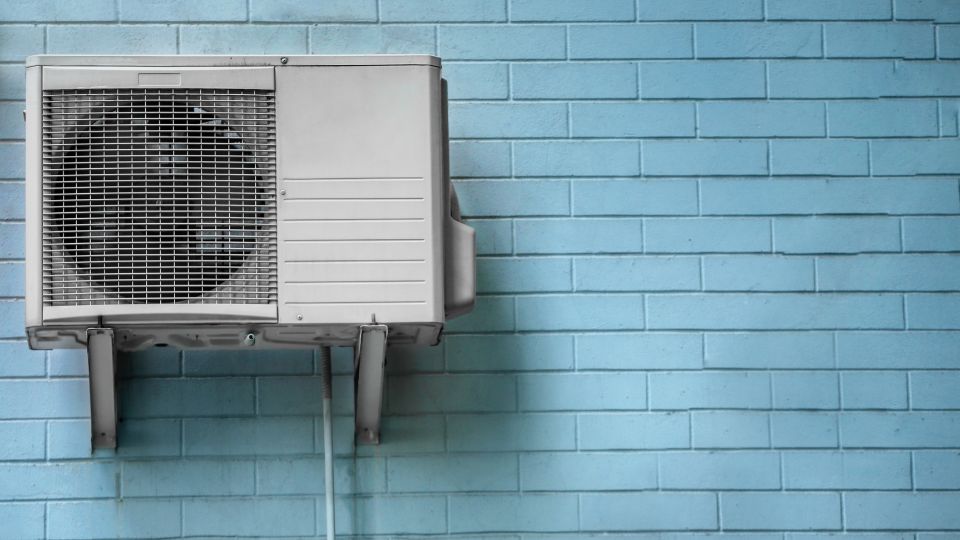
Most homeowners rarely inspect the outdoor condenser.
Yet it’s responsible for rejecting all the heat removed from your home. Walk outside and ask yourself:
Is it buried behind shrubs? Covered in leaves?
Blocked by rubbish bins? Packed with cobwebs?
Has grass grown around it?
Can air move freely around every side?
Poor airflow forces the system to work much harder. While you’re there, listen carefully.
Can you hear:
These observations often provide valuable clues.
Water dripping from an indoor unit often worries homeowners. Fortunately, the cause isn’t always serious.
Most commonly it’s a blocked condensate drain.
As your air conditioner cools the air, it removes moisture. That water needs somewhere to go.
When algae, dirt or debris blocks the drain, water backs up into the indoor unit. Many systems then activate a safety switch to prevent ceiling damage.
Can you fix it yourself?
Sometimes.
If it’s simply a blocked drain outlet.
But if water has entered walls or ceilings, professional attention is recommended sooner rather than later.
Ignoring water damage almost always becomes more expensive.
Here’s a useful observation anyone can make. When you turn the system on:
Does the outdoor unit:
✔ Start normally?
✔ Make a humming sound?
✔ Click repeatedly?
✔ Remain completely silent?

A unit that’s repeatedly clicking may be attempting to start but failing. One that’s completely silent could indicate:
This doesn’t tell you exactly what’s wrong but it helps narrow the possibilities considerably.
But they’re predictable.
If your system suddenly develops:
Different noises often indicate different problems.
A loose panel isn’t the same as a failing fan bearing. Likewise, a brief click at startup is perfectly normal. A loud electrical buzzing isn’t.
Rather than turning the television up louder, investigate early. Small mechanical issues often become larger repairs if ignored.
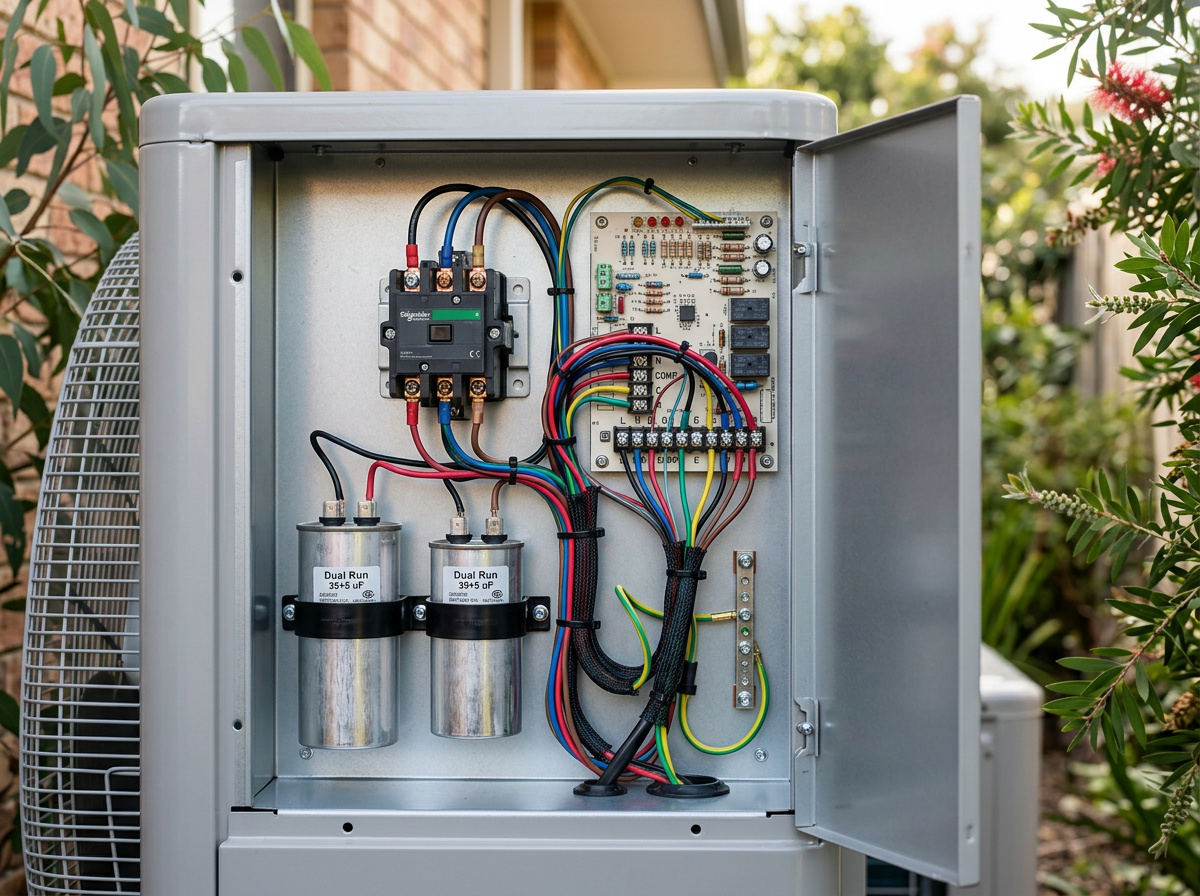
This is one area where you shouldn’t continue experimenting. If you notice:
Electrical faults can worsen quickly.
Fortunately they’re relatively uncommon but they should always be taken seriously.
Hunter Valley summers often bring spectacular thunderstorms. They also bring:
Many modern systems simply protect themselves.
Others may require professional inspection if sensitive electronics have been affected. Before assuming permanent damage, check:
Sometimes the solution is surprisingly simple.
This is one of the best questions homeowners can ask themselves. Did it stop suddenly?
Or has performance gradually declined? Gradual decline often suggests:
Sudden failure often points towards:
Understanding the pattern helps identify the likely cause.
We regularly service systems that are fifteen years old and still operating reliably. However, older systems naturally experience:
If your air conditioner is approaching fifteen years of age and beginning to require regular repairs, it’s worth discussing both repair and replacement options with your technician.
That conversation should always be based on value not sales pressure.
There’s a point where continuing to investigate isn’t productive. Stop and arrange professional assistance if:
Air conditioning systems combine electricity, refrigerant and pressurised components. They’re not designed for DIY repairs.
Knowing when not to continue is just as important as knowing where to begin.
By this stage, you should have a much clearer understanding of what’s happening. Ask yourself:
If you’ve worked through those checks and your system still refuses to operate correctly, you’ve already ruled out many of the simple possibilities.
That’s exactly where a professional diagnosis becomes worthwhile.
More importantly, you’ve avoided paying someone to replace remote batteries or press the wrong button on the controller something that happens far more often than most homeowners would believe.
In the next section, we’ll move beyond basic troubleshooting and answer the questions most homeowners really want to know:
We’ll also bust some of the biggest myths surrounding air conditioning repairs many of which could end up costing homeowners hundreds or even thousands of dollars if they’re believed.


We are proud to serve a wide range of locations across the Hunter Valley region. Whether you need air conditioning, refrigeration, or solar solutions, our expert team is ready to provide fast, reliable service. Explore the areas we cover below, and get in touch with us for tailored solutions designed to meet your needs, wherever you are.