Last updated on July 30, 2026
Has your air conditioner suddenly stopped working? Before you assume the worst or pay for an unnecessary repair take a few minutes to work through this guide. Many common air conditioning problems have surprisingly simple causes, while others are early warning signs that should never be ignored.
If you’ve lived in the Hunter Valley for any length of time, you’ll know that air conditioning isn’t a luxury it’s part of everyday life.
Whether you’re trying to escape a scorching January afternoon in Singleton, a humid evening in Maitland, or one of those relentless summer heatwaves that seem to settle over Muswellbrook and Cessnock, there’s never a convenient time for your air conditioner to stop working.
For many homeowners, the first thought is usually the same:
“This is going to cost me a fortune.” Fortunately, that’s often not the case.
One of the biggest misconceptions we see is that if an air conditioner won’t turn on, it must have suffered a major failure. In reality, modern air conditioning systems are designed to protect themselves. They constantly monitor their own operation, and if something doesn’t look right, they’ll often refuse to start rather than risk damaging expensive components.
Sometimes that’s caused by a simple setting on the remote. Sometimes it’s a tripped safety switch after a summer storm. Sometimes it’s nothing more than flat batteries.
Of course, there are also occasions when a genuine mechanical or electrical fault has developed. The important thing is knowing the difference.
This guide has been written to help Hunter Valley homeowners understand what they can safely check themselves, which issues are worth investigating before calling a technician, and when it’s time to stop troubleshooting and arrange a professional inspection.
If this guide saves you an unnecessary call-out fee, even better.
Most articles you’ll find online follow the same formula:
“Here are five reasons your air conditioner isn’t working.”
The problem is that they rarely explain why those faults occur, how serious they are, or whether they’re something you can safely investigate yourself.
Even worse, some articles encourage homeowners to start dismantling equipment or attempting repairs that should only ever be carried out by licensed refrigeration and electrical technicians.
That’s not helpful.
At Coalfields Climate Control, we’d much rather you understood what’s happening with your system before spending money unnecessarily.
Sometimes we’ll arrive to find the problem was as simple as an incorrectly programmed timer.
Other times we’ll discover an electrical component that’s beginning to fail something that, if caught early, can often be repaired before it causes damage elsewhere.
Knowledge saves money.
It also helps you make better decisions about whether your system needs servicing, repairing or, in some cases, replacing.
Many people imagine an air conditioner working like a light switch. You press a button.
It turns on.
Cold air comes out.
Modern systems are far more sophisticated than that.
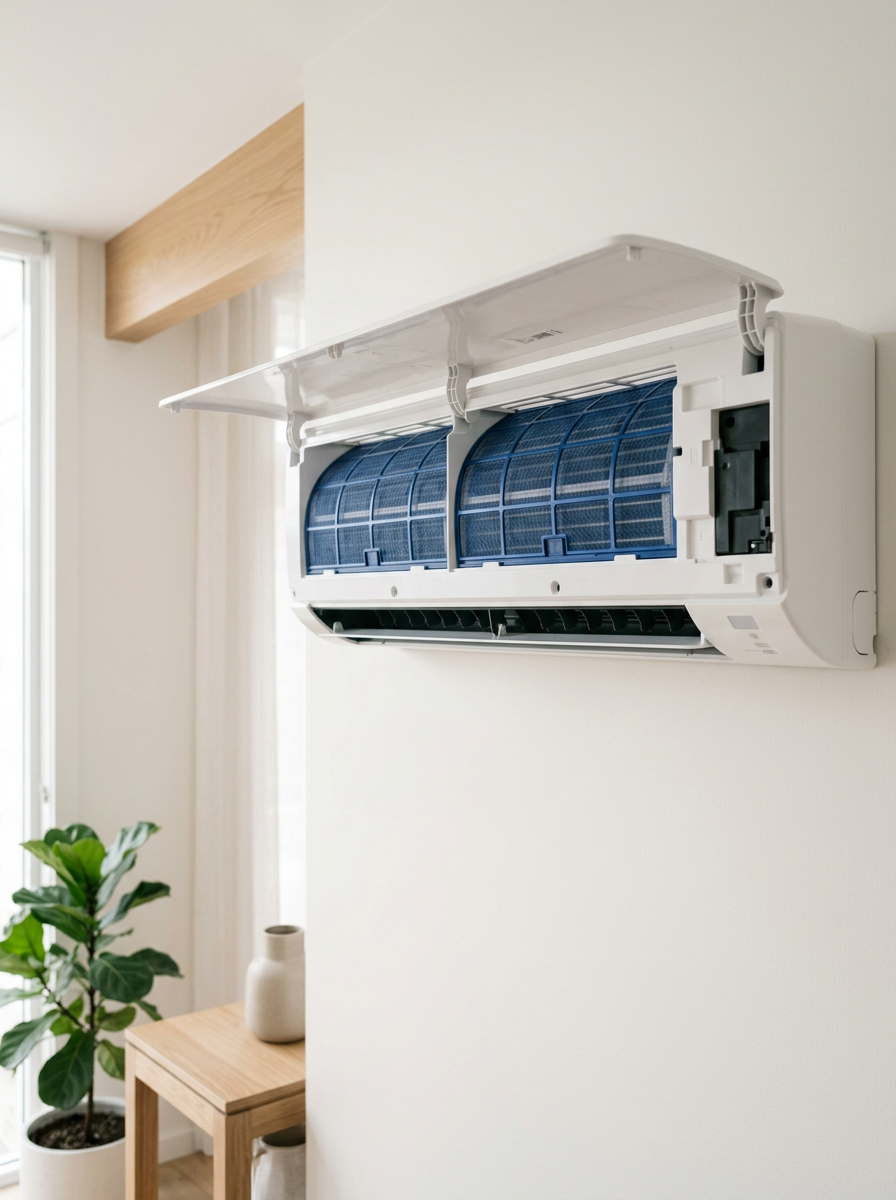
When you press the ON button, your air conditioner performs a series of safety checks before the compressor even begins operating.
Depending on the manufacturer, your system may check:
Only once those checks are complete will the system begin cooling or heating your home. If something isn’t operating within safe limits, the system may deliberately refuse to start. That doesn’t necessarily mean it’s broken.
In many cases, it’s actually protecting itself from a much larger and more expensive failure. Understanding this simple fact changes how you should approach troubleshooting.
Instead of assuming the worst, the better question becomes: “What is the system trying to protect?”
One of the biggest mistakes national websites make is treating every Australian home as though it experiences the same conditions.
The Hunter Valley is different.
Our climate, environment and housing all place additional demands on residential and commercial air conditioning systems.
That’s one reason why local knowledge matters. Long, Hot Summers
Hunter Valley summers aren’t just hot they’re sustained.
It’s not unusual for daytime temperatures to remain above 35°C for several consecutive days, with overnight temperatures offering little relief.
During these periods, many air conditioners operate almost continuously.
Unlike coastal regions where systems may cycle on and off throughout the day, Hunter Valley systems often work flat out from late morning until well into the evening.
Continuous operation naturally increases wear on components such as:
Older systems, particularly those over ten years old, often struggle during prolonged heatwaves simply because they’re being asked to work much harder than they were originally designed for.
If you live on a rural property, near agricultural land, close to mining operations or simply in an area affected by dry summer winds, you’ll already know how quickly dust accumulates.
Your air conditioner experiences exactly the same problem.
Fine dust is constantly drawn through indoor filters before eventually reaching coils and fans. Outside, condenser units are exposed to:
Over time, this buildup restricts airflow and forces the system to work harder. Many homeowners assume reduced cooling means the refrigerant has leaked.
In reality, restricted airflow caused by dirty filters or blocked condenser coils is often the real culprit.
Regular maintenance becomes far more important in dusty parts of the Hunter Valley than many people realise.
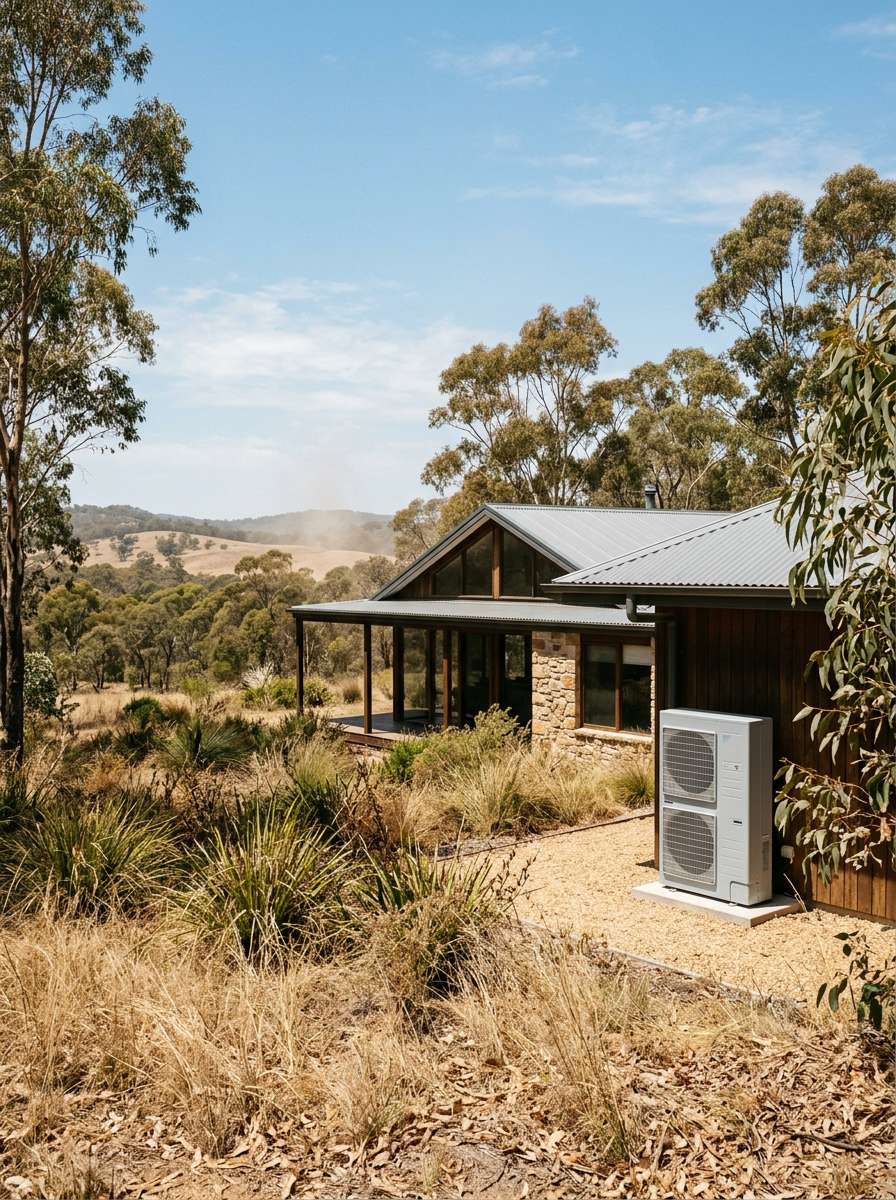
Summer storms are another common cause of unexpected air conditioning issues.
Power interruptions, voltage fluctuations and lightning activity can all affect sensitive electronic control systems.
Thankfully, modern air conditioners are designed with numerous safety features. Sometimes those protections simply require the system to be reset.
Other times they indicate a genuine electrical fault that should be professionally investigated.
The important point is that a storm-related shutdown doesn’t automatically mean your air conditioner has suffered permanent damage.
Bushfire smoke has become an unfortunate part of life across many parts of regional New South Wales.
While most people think about its impact on breathing, fewer realise how it affects air conditioning systems.
Smoke contains extremely fine particles that can settle on outdoor coils and reduce airflow. Combined with dust and pollen, this can gradually reduce efficiency over the course of a summer.
A professional clean following prolonged smoke events can often restore performance while helping extend the life of the system.
One thing we’ve learnt over the years is that many homeowners call a technician before checking the obvious.
That’s understandable.
Air conditioners are complex pieces of equipment. Most people don’t know where to begin.
The good news is that there are several things you can safely check yourself in just a few minutes.
None of these involve removing covers, exposing electrical wiring or touching refrigeration components.
They’re simply the logical first steps.
Think of them as eliminating the easy possibilities before assuming the worst.
In the next section, we’ll walk through each one, explain why it matters, and tell you exactly when it’s safe to continue troubleshooting and when it’s time to stop and call a professional.
It might sound unusual for an air conditioning company to say this, but we’d rather you didn’t pay us for something you don’t need.
If replacing two remote batteries solves the problem, that’s a great outcome.
If cleaning a clogged filter restores airflow, you’ve saved yourself both time and money. If a tripped safety switch simply needs resetting after a storm, even better.
Where our expertise becomes valuable is when those simple checks don’t solve the issue.
That’s when proper diagnostic equipment, technical experience and licensed refrigeration knowledge make all the difference.
They start by understanding why the system has stopped working. The goal isn’t to sell repairs.
The goal is to identify the actual fault and recommend the most sensible solution. Sometimes that’s a straightforward repair.
Sometimes it’s routine maintenance that should have been carried out months earlier.
Occasionally, particularly with older systems, it’s an honest conversation about whether repairing the unit still makes financial sense.
Whatever the outcome, you should understand exactly what’s happened, why it’s happened, and what your options are moving forward.
That’s the approach we’ve always believed serves Hunter Valley homeowners best.
Now that you understand how modern air conditioners protect themselves and why Hunter Valley conditions place extra demands on cooling systems we’ll move into the practical side of troubleshooting.
We’ll start with the simple checks that could save you hundreds of dollars before progressing to the warning signs that indicate it’s time to call a licensed technician.
By the end of the next section, you’ll have a much clearer idea whether your air conditioner needs a quick fix, a professional repair, or simply a little preventative maintenance before the next Hunter Valley heatwave arrives.


We are proud to serve a wide range of locations across the Hunter Valley region. Whether you need air conditioning, refrigeration, or solar solutions, our expert team is ready to provide fast, reliable service. Explore the areas we cover below, and get in touch with us for tailored solutions designed to meet your needs, wherever you are.